
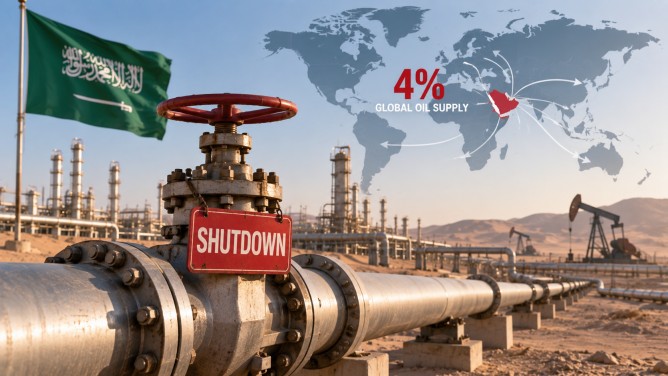
Saudi Arabia’s temporary closure of its vital East-West oil pipeline following an attack has sparked concerns about the stability of global crude oil supplies. The shutdown comes amid growing apprehension over Iran-backed Houthi forces, who have expanded their presence along Yemen’s Red Sea coast, potentially threatening regional oil shipments. The Houthis have gained significant control near the Red Sea and the Bab el-Mandeb Strait, a crucial maritime corridor linking the Red Sea to the Gulf of Aden, thereby intensifying fears over the security of oil transport in the region.
The East-West pipeline, stretching 1,200 kilometers, was shut down by Saudi Arabia on September 12 as a precaution after it was attacked the previous day. This pipeline plays a strategic role by enabling the Kingdom to transfer crude from its oil-rich eastern regions to the Red Sea, thus offering an alternative export route when the Strait of Hormuz experiences disruptions. The recent attack could further strain Saudi Arabia’s capacity to deliver crude to international markets, especially as the country had increased its Red Sea exports due to previous disruptions in the Strait of Hormuz during the US-Iran conflict.
With Brent crude prices already surpassing $100 a barrel amid rising Middle East tensions, market observers have expressed concern that an extended pipeline shutdown could significantly reduce the volume of oil available on the global market. The potential implications are particularly severe if both the Strait of Hormuz and the Bab el-Mandeb Strait face ongoing disruptions. Such restrictions could not only affect global energy supplies but also drive up transportation costs and further elevate crude prices.
Elevated oil prices could have broader economic repercussions, potentially fueling inflation in major economies by increasing the cost of fuel, transportation, and production. Nations heavily dependent on imported energy might encounter additional challenges regarding their trade balances and currency stability. The overall impact on global oil supplies and energy markets will largely depend on how long the Saudi pipeline remains closed and the evolving security situation around the Red Sea and the Strait of Hormuz.